Insurrection républicaine de juin 1832 à Paris
Les MisérablesThe June 1832 republican insurrection in Paris turns political opposition to the July Monarchy into an armed confrontation and places the novel’s characters inside a crisis larger than their individual struggles. At the Rue de la Chanvrerie barricade, a small republican band waits for an assault by government troops, while the widening revolt makes the conflict between popular hopes and state power visible in the streets.
Historical Setting and Immediate Context
The novel situates the insurrection among the events that define France between Waterloo and the popular uprisings of June 1832. The funeral of General Lamarque precedes the revolt in the historical chronology, and the rising is presented as a threat to the July Monarchy. Its narrated action begins on June 5, as agitation grows across Paris and a large popular disturbance is anticipated.
The insurrection also belongs to a broader account of a society in transition. The narrative’s historical overview contrasts the fading authority of aristocratic tradition with the influence of commercial and industrial wealth, while describing a laboring population burdened by poverty and exploitation. It does not reduce the uprising to a single cause, but sets it within a world where hardship and political dissatisfaction coexist with the ideals and enthusiasm associated with younger characters.
The Barricade and the Insurgents
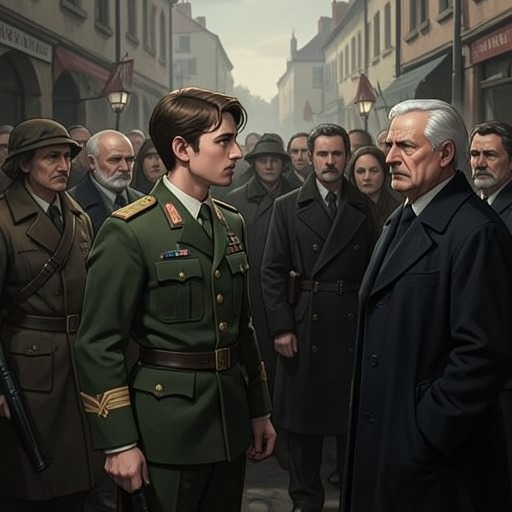
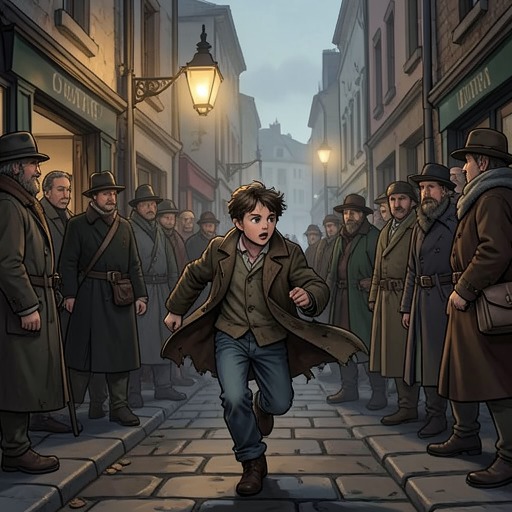
Marius learns that his friends are waiting at the barricade on the Rue de la Chanvrerie. Among them are Courfeyrac, Bossuet, Combeferre, their leader Enjolras, and Gavroche. The appeal draws Marius into a collective struggle: the barricade is not merely the setting for a private decision, but the point at which a close circle of friends joins a wider confrontation.
As night falls, the insurgents hear only scattered, distant gunfire. The pause does not mean safety. It suggests that the government is taking time to assemble its forces, and the disparity is stark: fifty men wait against an expected sixty thousand. The detail shifts the scene from the excitement of political defiance toward the peril of an isolated group facing a much larger state response.
Capture and the Unequal Course of the Fighting
The uprising’s military imbalance shapes what happens at the barricade. In a later phase of the fighting, the insurgents have taken uniforms from dead National Guardsmen so that married men and fathers can escape across the enemy lines. There are only four uniforms for five men. The shortage makes escape a practical, limited possibility rather than a general route to safety, and underscores the pressure on those who remain.
The barricade also exposes the presence of the police within the insurgents’ midst. After a man gives his name as Javert, Enjolras signals four others; they seize, restrain, and search him before he can turn around. A round identification card, bearing the French arms and the designation of Javert as a fifty-two-year-old police inspector, confirms his identity. The capture makes the confrontation more than a clash between two visible forces: state authority has also entered the rebels’ ranks in disguise.
Political Meaning and Aftermath
The insurrection’s place in the novel connects political violence with the social conditions that shape its other lives. In the account of Jean Valjean’s youth, a winter without work leaves his family without bread; his theft of a loaf is followed by conviction and a sentence of five years in the galleys. That history does not explain the uprising as a direct consequence of one character’s poverty, but it supplies a parallel view of a society in which deprivation and the machinery of punishment bear heavily on the poor.
The narrative presents the June rising as a grave challenge to the July Monarchy, and the barricade episode emphasizes the rebels’ exposure to a vastly larger government force. Its significance extends beyond the immediate battle: the collective action brings political ideals into contact with material limits, including scant numbers, scarce means of escape, and the state’s capacity to concentrate force. In 1849, Hugo would argue before the Legislative Assembly that suffering might be unavoidable while social misery could be destroyed, insisting that what was possible remained a duty. That later distinction resonates with the novel’s broader concern for the conditions beneath revolt without making the speech part of the events of 1832.